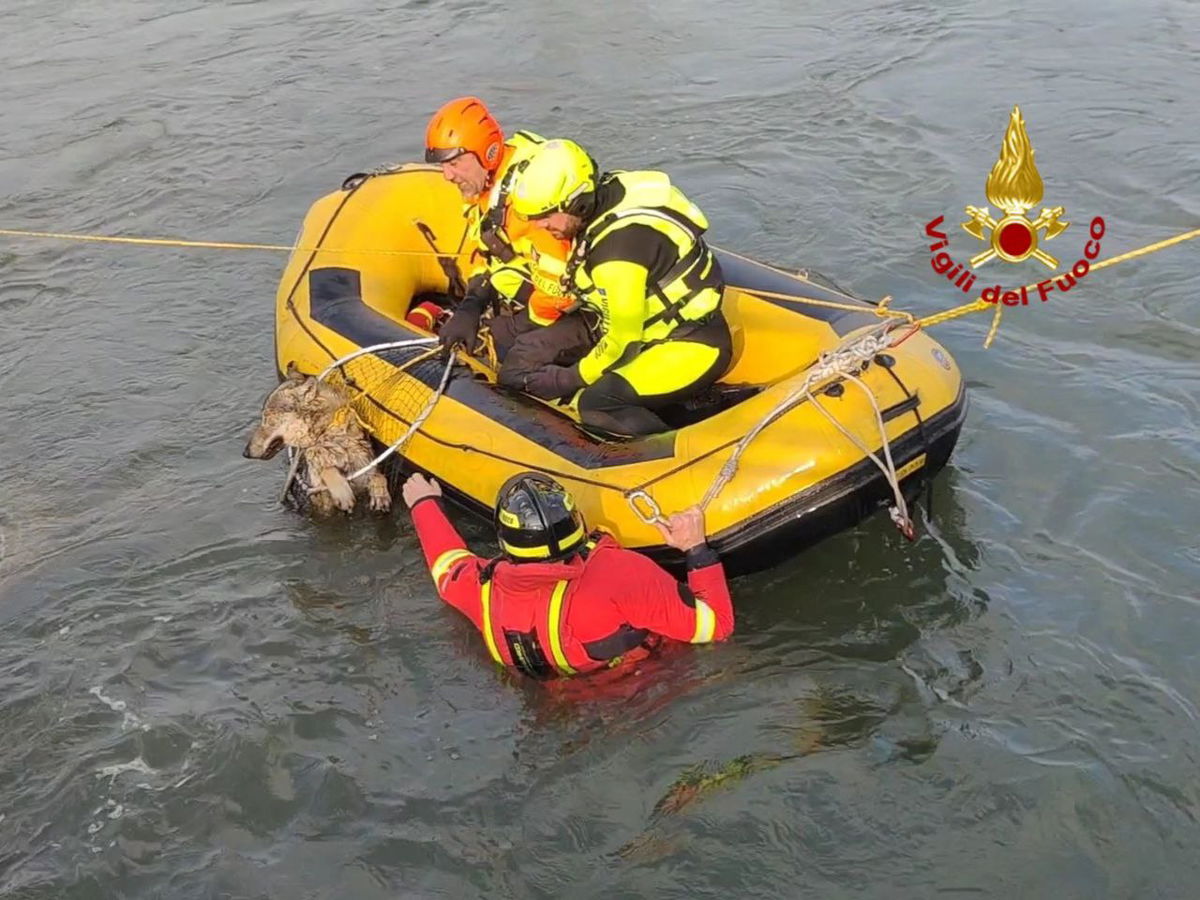
After being lifted from the water, the wolf was immediately examined by a team of veterinarians. Photo credit. Vigili del Fuoco
Firefighters in San Giovanni Lupatoto, near Verona, sprang into action on Wednesday after an animal was spotted struggling in a local canal. The rapid response by emergency crews drew attention from residents and highlighted the challenges of rescuing wildlife in urban-adjacent areas. The operation involved careful coordination with veterinarians to ensure the animal’s safety once it was removed from the water. Officials praised the swift action of the fire brigade in preventing potential harm to both the animal and the surrounding community.
Discovery of the trapped wolf
The animal was first spotted by residents near a canal running through the town. According to reports, the wolf had fallen into the water and was unable to climb out due to steep, slippery banks. Exhausted and stressed, the wolf had sought refuge beneath a bridge, making direct access difficult for rescuers. Emergency services were called to the scene immediately after the animal’s plight was reported.
Authorities from the local fire brigade assessed the situation and determined that a careful rescue would be required to prevent injury to both the animal and personnel. Wolves are generally shy and wary of humans, and the team faced the dual challenge of safely retrieving the wolf while minimising stress and risk to the animal.
The rescue operation
The fire department deployed an inflatable boat to reach the wolf beneath the bridge. Firefighters equipped with nets and handling equipment worked cautiously, approaching the animal slowly to avoid provoking defensive behaviour. Once close enough, they used sedation to calm the wolf and facilitate safe extraction from the canal. The operation required both precision and teamwork, with emergency crews coordinating closely to ensure the animal’s welfare.
After being lifted from the water, the wolf was immediately examined by a team of veterinarians. Preliminary reports indicated that the animal, a young female, had no serious injuries, though it was suffering from exhaustion and mild stress due to the ordeal. Wildlife specialists noted that the prompt response of the firefighters and medical team was crucial to the successful outcome.
Follow-up care and release plans
Following the rescue, the wolf was transported to a veterinary facility for further monitoring. Experts indicated that it would remain under observation for a short period to ensure full recovery before being released back into the wild. The area around San Giovanni Lupatoto is known for periodic sightings of wolves, and conservation authorities emphasised that returning rescued animals to their natural habitat is essential for maintaining local ecosystems.
The rescue was praised by both local officials and wildlife advocates, highlighting the importance of preparedness and trained personnel in dealing with human–wildlife interactions. The incident also drew public interest, with videos and photographs from the rescue operation circulating on social media and news outlets.
Wolves in northern Italy
Wolves in northern Italy have been increasingly observed in both rural and semi-urban areas in recent years. This resurgence is attributed to conservation measures and habitat protection policies that have allowed wolf populations to recover from decades of decline. While sightings near human settlements remain relatively rare, such encounters underscore the need for continued awareness and safe handling protocols for both wildlife and residents.
Conservation experts encourage local communities to remain vigilant and report any distressed or trapped animals to authorities promptly. The San Giovanni Lupatoto incident demonstrates how coordinated action between emergency services and wildlife specialists can ensure the safety of both humans and animals in such situations.
For now, the rescued female wolf is expected to return to her natural territory fully recovered, serving as a reminder of the delicate balance between human activity and wildlife in Italy’s northern regions.